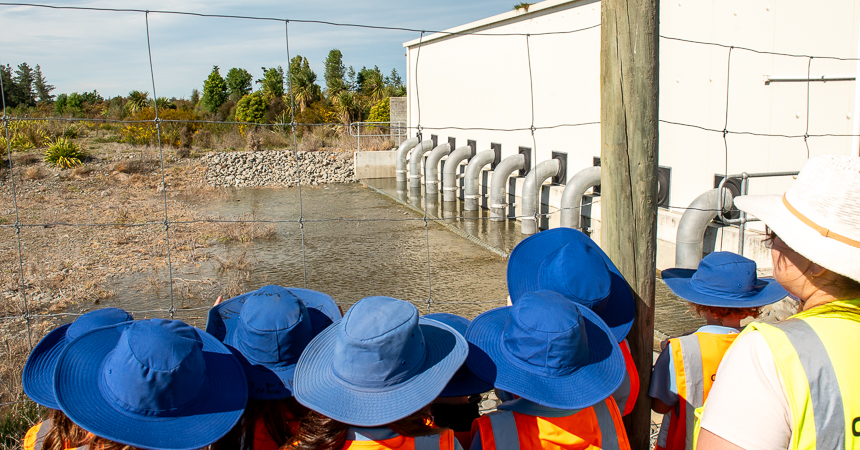
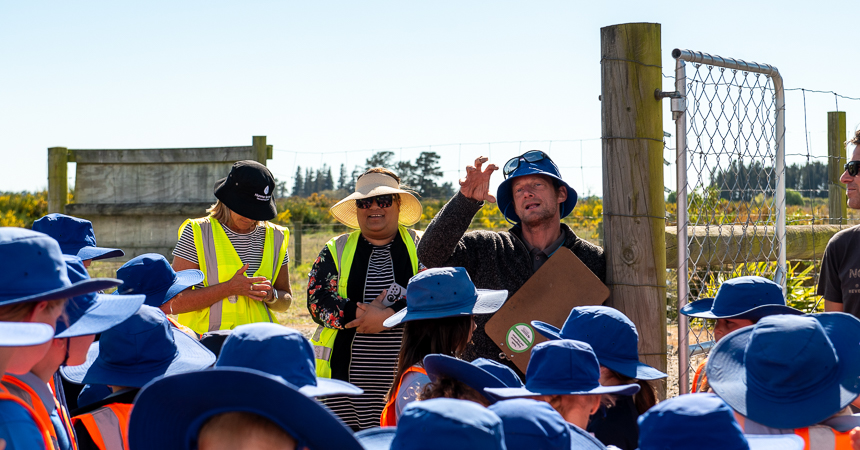
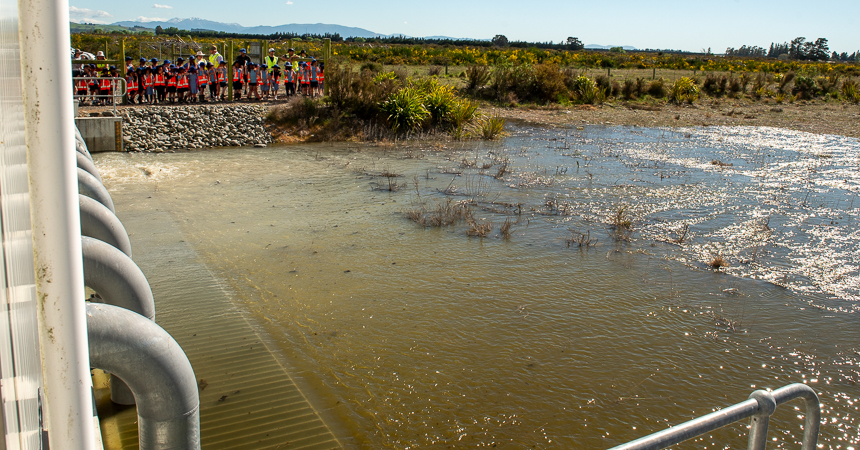
Students learn about the Near River Recharge site.
Reconnecting with the site
In October we co-hosted Greendale Primary School students at the Selwyn Waikirikiri Near River Recharge (NRR) site alongside Environment Canterbury, with support from Enviroschools. The visit was funded through our Environmental Education Grant for schools within the Central Plains Water scheme boundary.
Exploring the site.
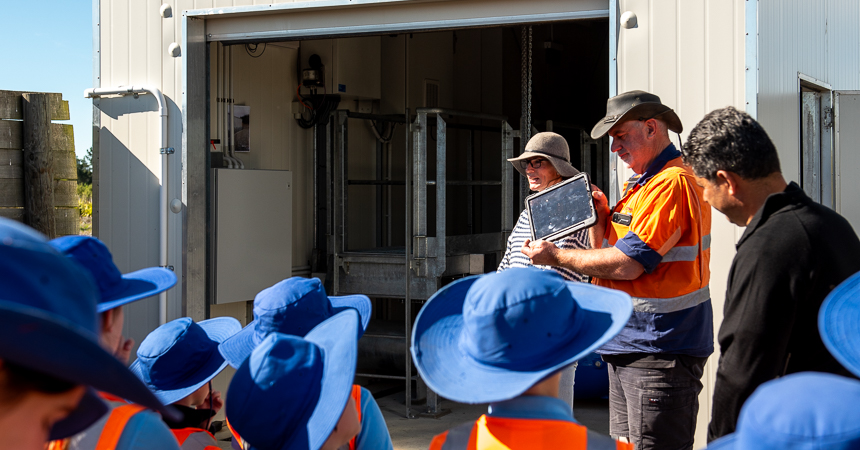
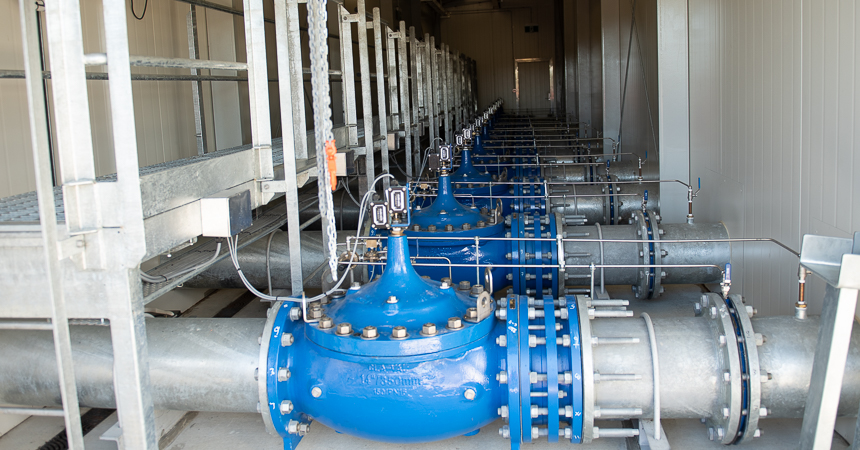
Our Environmental Manager Fiona Crombie and Operations and Maintenance Technician David Hynam led students on a tour of the NRR site, explaining the pump room and how the recharge system works. Students then watched a live demonstration as the system was switched on, only the second time it has operated since being commissioned.
Restoring native habitat.
Greendale School is helping protect and restore native species at the site. Native seedlings have been planted around the edges of the recharge basin to attract native birds, and the site is also home to a lizard sanctuary.
Greendale School Principal Brayden Johnson says the funding allowed the school’s Enviro Group to reconnect with the site, something that had not been possible in the previous 12 months.
“After the visit, our students had many questions, and we want to continue working with Environment Canterbury and CPWL to leave a legacy at the site.”
How does the NRR system work?
During dry periods, up to 3.5 cumecs of consented Rakaia River water can be diverted from our piped irrigation network into a large basin near the Selwyn River. The water slowly soaks into the ground, where soils, gravels and plant roots filter it naturally, much like a wetland. This recharges groundwater without directly mixing water from the two river systems.
With a strengthening El Niño weather pattern expected to bring dry, windy conditions to parts of Canterbury this summer, the NRR system may be needed in the coming months.
Supporting groundwater and river flows in Canterbury.
The Selwyn Waikirikiri NRR project was developed under the Canterbury Water Management Strategy to raise groundwater levels and improve flows in the Waikirikiri / Selwyn River and Hororata River. It was officially opened in September 2020.